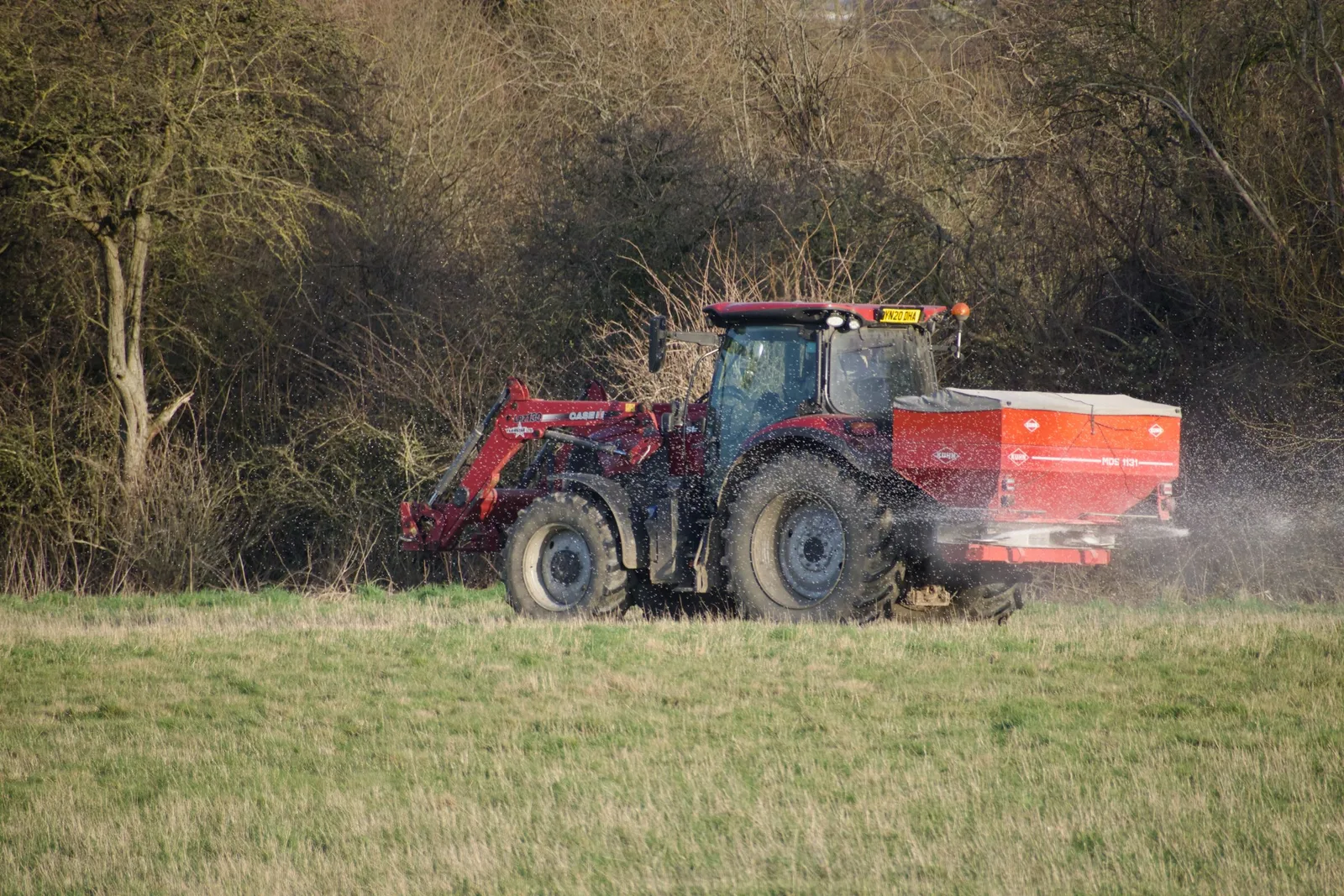
If a soil analysis has ever handed you a pH of 5.8 and left you to work out what that means in tonnes and pounds, this one is for you. Our new Lime Requirement Calculator turns a measured soil pH into a rate per hectare — and a total tonnage for the field, if you give it the area.
What it does
You enter the pH from your soil report, your soil type, and your cropping system. The tool applies the liming factors and target pH values from Section 1 of the AHDB Nutrient Management Guide (RB209) — the same tables an adviser would page through — and gives you tonnes per hectare of ground limestone or chalk. It handles the details that are easy to get wrong:
- Material differences: rates are quoted at neutralising value (NV) 50 and adjusted for what you actually spread — burnt lime at NV 80 needs a third less than ground limestone. For materials RB209 quotes as a range, like sugar beet lime, it asks for the NV on your delivery ticket rather than guessing one.
- Arable vs grassland and topsoil vs subsoil — different factors and targets for each.
- Small requirements: where the calculated dressing is under 2 t/ha, it says plainly that a pass that small may not be worth making on its own, instead of printing a number that looks like an instruction.
Why lime first
Poor pH quietly caps everything else you spend money on: in acid soils, nitrogen, phosphate and potash are simply less available to the crop. Correcting pH is the cheapest yield lever on most farms, and the arithmetic is published, stable and checkable — which is exactly the kind of calculation a free tool should do for you.
Try it
ukpai.org.uk/tools/lime — free, no signup, works on a phone in the yard. If you spot a case it gets wrong, tell us and we will fix it.
Contains public sector information licensed under the Open Government Licence v3.0, attributed on the tool page. A nutrient (N, P, K) recommendation calculator built on the AHDB RB209 Web API is in development.