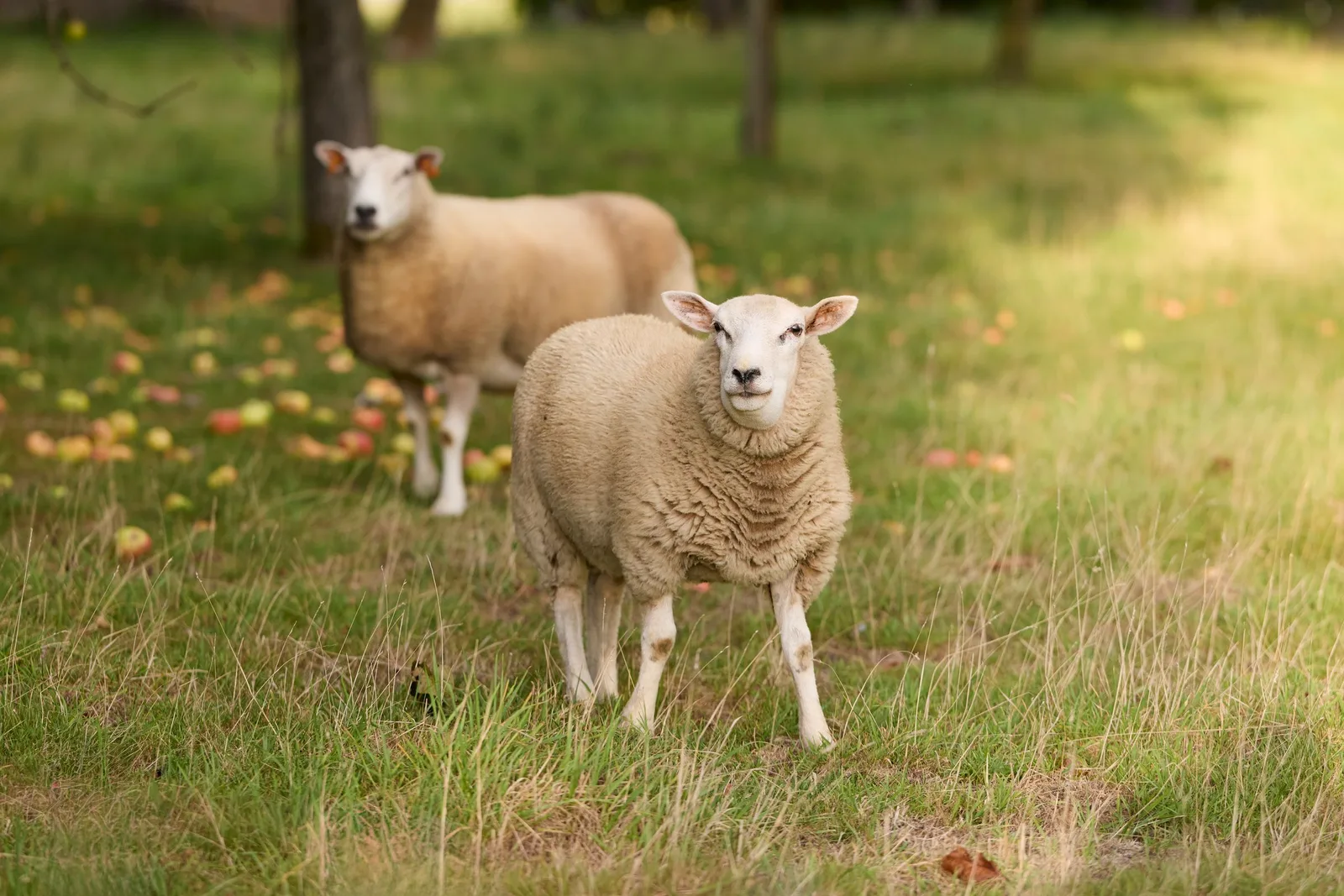
The short version: two more Higher Tier agreements can now be asked for without waiting to be invited. Since 3 November, farmers and land managers can send an expression of interest (EOI) for a Countryside Stewardship Higher Tier (CSHT) single-focus agreement covering traditional orchards or wet grassland for wintering waders and wildfowl, Defra announced on its Farming Blog. They join the two single-focus topics that opened in July, species-rich grassland and scheduled monument management, which have drawn over 1,100 EOIs so far.
A single-focus agreement is a simplified CSHT agreement built around one priority action. The EOI is only the first step: it does not guarantee an agreement, and an approved EOI still goes through the full CSHT application.
What each one pays
The rates and lengths below are from GOV.UK's CSHT actions. The applicant's guide names which actions sit behind each topic.
| Agreement | Action | Payment | Length |
|---|---|---|---|
| Traditional orchards | CBE4: Manage traditional orchards | £264 per hectare a year | 5 years |
| Traditional orchards | CBE5: Create traditional orchards | £471 per hectare a year | 10 years |
| Wet grassland for wintering waders and wildfowl | CGS19: Manage wet grassland for wintering waders and wildfowl | £547 per hectare a year | 5 years |
| With CGS19, where your land needs it | CWT3: Manage ditches of high environmental value | £38 per 100 metres a year, both sides of the ditch | 5 years |
| With CGS19, where your land needs it | CSP11: Manage scrapes and gutters supplement | £1.17 per square metre a year, the scrape or gutter itself | 5 years |
You can ask to manage an orchard, create one, or both. If your EOI is approved, a Natural England adviser helps you put the application together, including any supplemental actions and capital items that fit.
Which land qualifies
Traditional orchards. For these actions an orchard means fruit or nut trees grown on vigorous rootstocks in permanent grassland, mainly apple, pear, cherry, plum, damson, cobnut or walnut. To manage one (CBE4) it must be mapped on the Priority Habitat Inventory on MAGIC, or confirmed by your Natural England adviser, and at least a third of the original plantings must be trees over 10 years old. Creating one (CBE5) works where an orchard once stood and you have the evidence, such as old maps or photographs; where a new orchard would join up with existing trees, wood pasture or woodland; or where an old orchard has fallen below that one-third.
Wet grassland for wintering waders and wildfowl. The land has to be below the moorland line and be one of: coastal or floodplain grazing marsh that supports wintering waders and wildfowl, which does not need to be mapped; other wet grassland that already supports them; or land with high potential to be restored for them. Arable or temporary grassland below the moorland line can also qualify if it has high potential to be turned into wet grassland. The action comes with firm limits, among them no fertiliser or farmyard manure unless your Natural England adviser agrees, and no pesticides, apart from herbicide spot treatment or weed-wiping agreed with them. If wildfowling is carried out on the land, the guide asks for a wildfowling strategy, on its template, shared with Natural England.
Before you fill in the form
- Read the CSHT applicant's guide to check that you, your land and the action all qualify.
- Check that your business email, phone number and permissions are up to date in the Rural Payments service, and that you have the right permissions if you are acting for someone else. Defra warns that out-of-date details can delay an EOI or get it rejected.
- Have the RPA land parcel numbers and sizes ready for the land you want to include.
- Send a separate EOI for each topic, and a separate one for each site under the same SBI. Only one CSHT application can be in progress per SBI at a time.
- Land on common land cannot go in for now, for what the guide calls technical reasons.
The form itself is on GOV.UK: Express interest in Countryside Stewardship Higher Tier.
Who should not send one
The guide rules out an EOI if, on the land you would include, any of these apply:
- you have already been invited to apply for CSHT;
- you are at the pre-application stage, or expecting pre-application advice from Natural England;
- you have an agreement expiring more than 9 months from the date of your EOI.
What happens after you send it
Natural England contacts you within 10 weeks with the next steps, and tells you whether it needs a site visit. Historic England does this instead for scheduled monuments. If the EOI is approved you will also need a CS Historic Environment Farm Environment Record (HEFER) to prepare the application, and from there it follows the normal CSHT application process.
Species-rich grassland in winter
The two July topics are still open. One catch for species-rich grassland: an EOI sent between 1 November and 31 March, outside the survey season, has to come with data from an earlier survey. That does not apply to land in an expiring HLS HK6, SFI GRH6, CS GS6 or CSHT GS6 agreement.
Still to come
Defra says it is continuing to roll out the full CSHT offer to more farmers, and will give farmers with expiring Higher Level Stewardship agreements an update before those agreements end. Every scheme open right now, with its dates, is on our farming grants page.
Sources
- Defra Farming Blog — Express an interest in new actions available through CSHT single-focus agreements (3 November 2026)
- GOV.UK — CSHT applicant's guide, section 2: Express an interest in applying for CSHT
- GOV.UK — CSHT actions: CBE4, CBE5, CGS19, CWT3 and CSP11
- GOV.UK — Express interest in Countryside Stewardship Higher Tier
- Defra Farming Blog — An update and reminder of CSHT single-focus agreements (31 July 2026)
This is a summary of Defra's guidance, not advice. Check the applicant's guide for your land before you send an EOI.