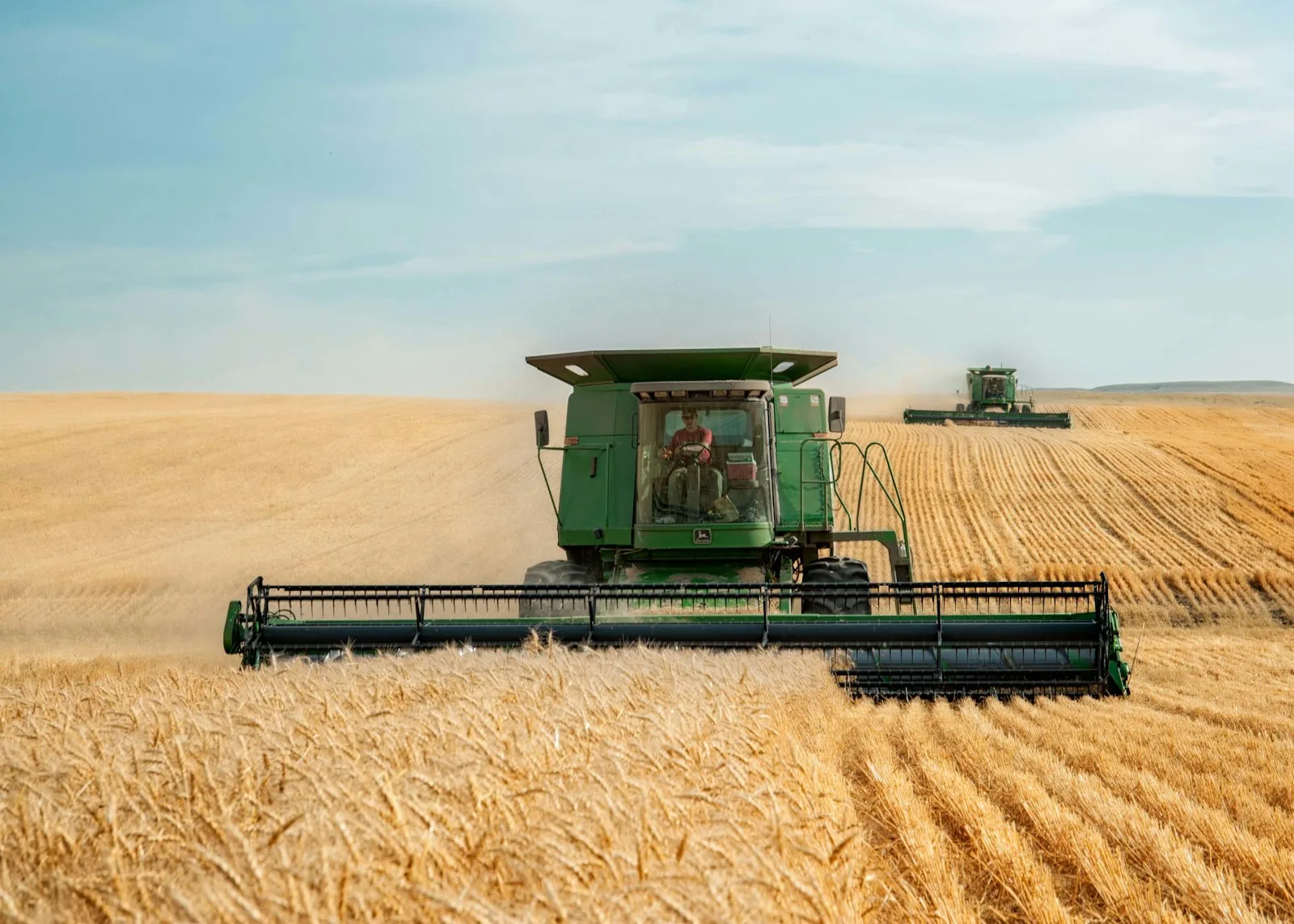
Harvest 2026 started early after the hot, dry run through June and July. By mid-July, Farmers Weekly's harvest round-up had growers cutting winter wheat, winter barley, oilseed rape, winter oats and even blue peas — and the early picture is exactly what a dry season produces: sharp differences between soils that held moisture and those that did not.
The first yield reports
Per Farmers Weekly, winter wheat in Kent is cutting at 6.5–8.5t/ha, with the lower end on lighter land where, as one grower put it, "the weight isn't there". In Somerset, by contrast, wheat is averaging around 9t/ha — above the farm's typical 8.5t/ha.
Quality is holding up
Early wheat quality looks sound in the same reports: moisture around 13% and specific weights of 80–82kg/hl in Kent, with proteins of 13–14% and Hagbergs of 300–400 seconds. Dry weather at harvest also means minimal drying costs — one of the few savings this season offers.
Oilseed rape is the early winner
The standout crop so far is winter oilseed rape. One Somerset grower reported 4.5t/ha against a usual 3.8t/ha, with oil contents of 45–46.5%. That echoes the condition scores through the season: AHDB's crop development report (data to 22 June) rated 80% of winter oilseed rape good or excellent, against just 58% of winter wheat — down from 64% a month earlier after the dry spring.
The market backdrop
Prices have moved too. AHDB's arable market report of 13 July notes UK feed wheat futures (Nov-26) gained £8.25/t (4.6%) over the week to close at £186.00/t, supported by a cut in the EU-27 maize forecast to 52.7Mt — the lowest since 2007 — which pushes demand towards wheat and barley.
Variation is the lesson
From 6.5t/ha on light ground to 9t/ha where moisture held, this harvest is a field-by-field map of water availability. Yield mapping this season is the cheapest way to see exactly where your soils gave up first — and where variable-rate inputs would have paid. Our precision agriculture guide covers how to turn this year's combine data into next year's zone maps, and our free farm tools can help you plan from it.
Sources
- Farmers Weekly — Harvest 2026: light land crops struggle and some OSR wins
- AHDB — Arable Market Report, 13 July 2026
- AHDB — Crop development report
Early yield reports are a snapshot from individual farms, not a national average. AHDB publishes GB-wide harvest progress reports as the season develops — check the source links for the latest position.