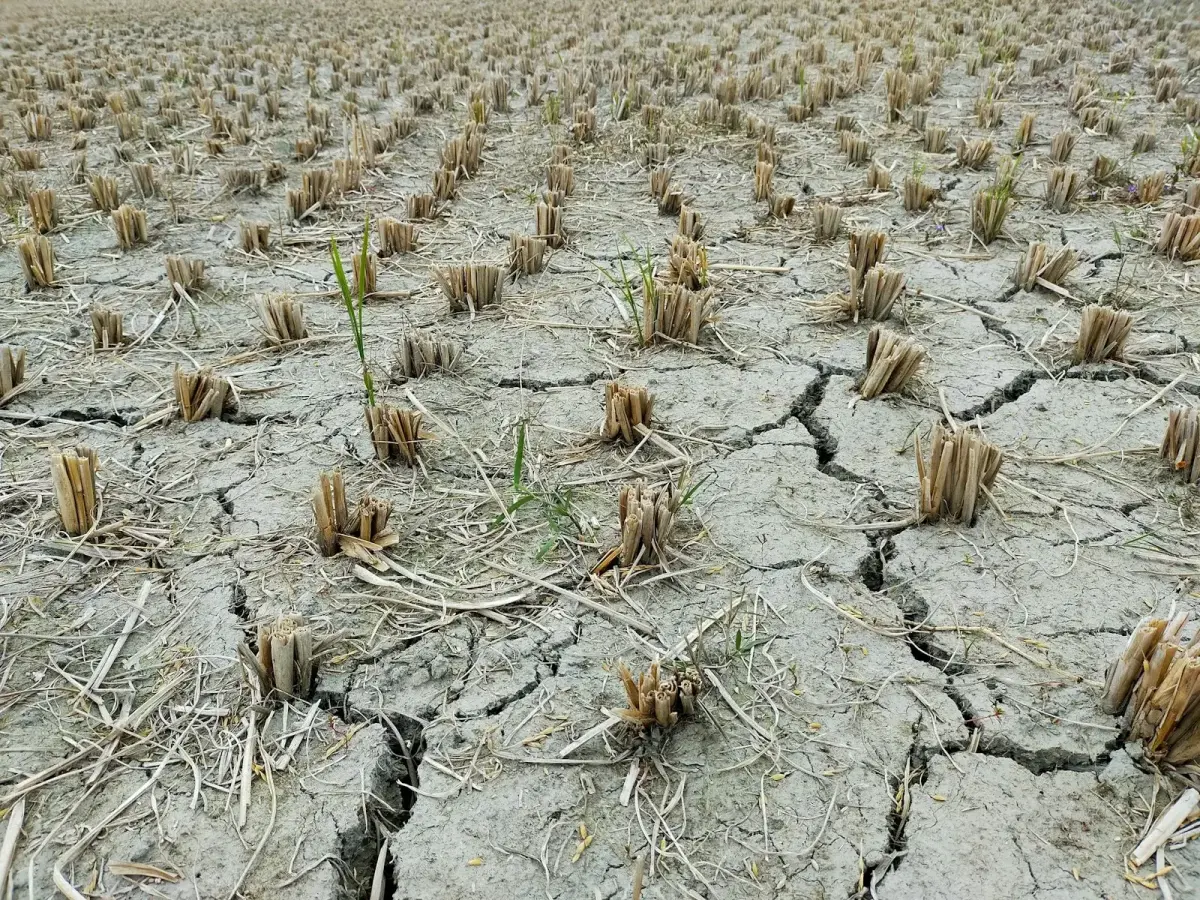
The Environment Agency's dry weather report for 10–16 July 2026 confirms what most growers can see from the tramlines: a very dry, very hot start to July is now feeding through into water restrictions that directly affect irrigated cropping.
What the report says
In the reporting week, England received just 3% of its long-term average rainfall, ranging from 0% in the south east and east to 9% in the north west. The majority of river flows are now classed as below normal or lower, with seven sites — including the Swale, Tone and Cam — exceptionally low. Reservoir storage across England stands at 78.8%, around 5% below the long-term average for the time of year.
Three areas in prolonged dry weather
No area of England is formally in drought, but three are classed as in prolonged dry weather: Devon, Cornwall and the Isles of Scilly; parts of East Anglia (the Cam & Ely Ouse and North West & North Norfolk catchments); and Solent and South Downs (Hampshire and the Isle of Wight).
What it means for irrigators
The number that matters most for abstractors: 1,327 hands-off flow restrictions were in force on abstraction licences in the week to 16 July, up from 729 the week before — close to double in seven days. Where farms are heavily reliant on storage reservoirs, the Environment Agency reports irrigation reserves are only around 30% to 50% full. The report also notes early harvesting, heat stress on some crops, and growing concern about winter forage supplies where grass growth has been limited.
Hosepipe bans are spreading
Several water companies have announced temporary use bans, including Southern Water (Hampshire and the Isle of Wight, enforceable from 10 July), Anglian Water (11 July), South West Water (14 July), and Affinity Water and Cambridge Water (both 17 July), with South East Water restricting use in Kent. These bans target domestic use, but they are a clear signal of how tight regional supplies have become.
Making every cubic metre count
When abstraction is restricted and stored water is finite, uniform irrigation is the most expensive habit on the farm. Soil-moisture monitoring and zone-based scheduling put the water you are still allowed to pump where the crop can actually respond. Our heat stress tool helps you read local conditions day by day, and our guide to precision agriculture in the UK covers the monitoring technology and the funding routes that support it.
Sources
- GOV.UK — Dry weather and drought in England: 10 to 16 July 2026
- GOV.UK — Dry weather and drought in England 2026: summary reports
Figures reflect the Environment Agency report for 10–16 July 2026. The water situation changes weekly — check the latest summary report and your abstraction licence conditions before planning irrigation.