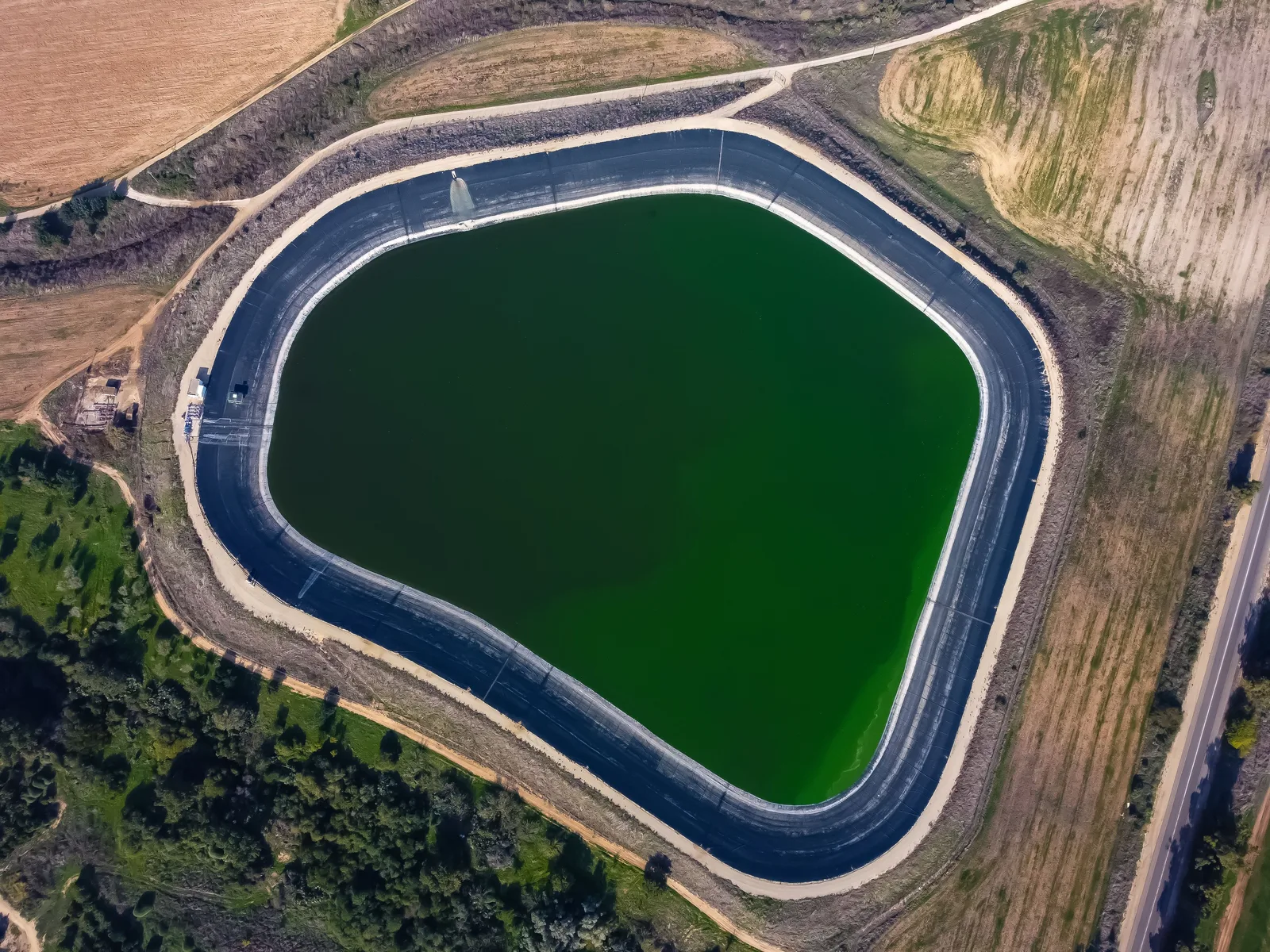
Reservoir grant round 3 opens on 30 November: up to £300,000, at most 40% of the cost, and no quotes this time
Round 3 of the Water Management grant opens on 30 November 2026 and its first stage closes at 11.59pm on 23 February 2027. Up to £15 million for irrigation reservoirs, above-ground tanks and underground water mains in England: grants of £35,000 to £300,000 (from £15,000 for tanks only), never more than 40% of the cost. What it pays per cubic metre, who can apply, how it is scored and what changed since round 2.
The short version: if you irrigate, or want to, there is money for somewhere to keep the water. Round 3 of the Water Management grant opens on Monday 30 November 2026 and its first stage closes at 11.59pm on Tuesday 23 February 2027. Defra has put up to £15 million into it. It pays towards new irrigation reservoirs, above-ground water tanks and underground water mains in England, with grants from £35,000 to £300,000 per business, or from £15,000 if the project is tanks only. It never covers more than 40% of the eligible cost.
This is the reservoir round Defra promised in the August drought package, and the guidance went up on GOV.UK on 19 November.
You pay at least 60%. At least 60% of the eligible project costs must come from private money, such as savings or a bank loan. Lease purchase and hire purchase are not allowed.
It is a competition, not a queue. The RPA scores every eligible application and funds the highest scores if the money runs short. Applying on day one gives you no advantage; Defra says to take the time you need.
Nothing starts before your agreement does. Starting work, placing an order, paying a deposit or signing a contract before the start date on your grant funding agreement can make the whole project ineligible. Getting planning permission, an abstraction licence, plans and drawings beforehand is fine.
It is paid after you've paid. Grants are paid in arrears, in no more than three claims.
It pays for the store and the pipe, not the irrigation kit. Pumps, filters, boreholes, hose reels, above-ground pipes and irrigation equipment are all out, and so are engineers' fees, design fees, legal costs, the cost of getting planning permission or a licence, and VAT.
So what does it actually pay for?
Four items, each with a fixed reference rate. At claim stage you get the lower of two figures: the reference rate for what you built, or 40% of your invoices for the eligible items.
Item
Grant
Smallest that reaches the minimum on its own
WMG01 earth bank reservoir, clay lined
£3.60 per m³ for the first 10,000 m³, then £0.90 per m³
9,723 m³ (£35,000)
WMG02 earth bank reservoir, synthetic liner
£4.40 per m³ for the first 10,000 m³, then £1.10 per m³
7,955 m³ (£35,000)
WMG03 above-ground water storage tank
£28.40 per m³; each tank at least 100 m³
529 m³ of tanks (£15,000)
WMG04 underground water distribution main
£12 per metre
2,917 m (£35,000)
The last column is our arithmetic from Defra's rates: the minimum grant divided by the rate. Projects can combine items, and a combination of reservoir, main and tanks needs £35,000 in total.
To see how the two figures meet, take a 20,000 m³ reservoir with a synthetic liner. The reference rate gives 10,000 × £4.40 + 10,000 × £1.10 = £55,000. That is what you get if the eligible invoices come to £137,500 or more; below that, 40% of the invoices is lower, and that is what you get.
Reservoirs must be new. Extending or modifying an existing one is not eligible. Design and construction must comply with the Reservoirs Act 1975 and have regard to CIRIA R161.
Tanks are circular, bolted galvanised steel on a concrete base, with an anti-algae cover in the reference cost.
A main must be HDPE or metal, and physically connected to a reservoir or tank. Hydrants along it are included.
The water can come from a river or stream, from groundwater, or from rain off the roof of a glasshouse, polytunnel or farm building. Mains water, yard run-off and recycled irrigation water are out.
Everything must be new, and you keep it for 5 years after the final payment.
What changed since round 2
No quotes. Eligible items use reference costs, so the application no longer needs quotes.
A lower door for tanks. The new £15,000 minimum for tanks-only projects is there, in Defra's words, "to support smaller growers where space for a reservoir may be an issue".
A lower ceiling. The maximum is £300,000 per business, down from £500,000 in round 2.
Permissions can come later. You can apply without planning permission or an abstraction licence. You need them within 12 months of your agreement, or before your first claim if that comes sooner.
The applicant doesn't have to be the grower. At least one farmer or grower must use the water to irrigate crops, and you have to show it.
Where you farm counts. Projects in the areas with the least water available score higher.
A new online service. You apply through the Farm and Land Service.
Who can apply
A landowner farmer or grower, or a tenant farmer or grower, who will own and maintain the items and use the water on their own crops. Others can use the water too.
A landowner landlord who isn't a farmer, where tenants or other growers use the water. Local authorities, national park authorities and the Crown Estate can apply this way.
A water management company formed by farmers, growers and landowners to store and share water for irrigation, which owns or rents the land the items sit on.
You need a Single Business Identifier (SBI) in the Rural Payments service, with "make legal changes" or "full permissions" for the business. A tenant needs the landlord's agreement first, and a tenancy that runs until 5 years after the final claim is paid. Everything has to be in England, and the project can't sit on common land or land with shared grazing rights.
The water has to irrigate crops, and the list of eligible ones is wide: arable crops, field vegetables and potatoes, grass and forage, soft, top and stone fruit, vines, ornamentals, crops under glass or polytunnel, and forest nursery stock. Water for washing, livestock, sport or leisure doesn't count.
a location in an area of least water availability, shown in red on the priority map in Annex A of the guidance, which combines Met Office summer rainfall for 1991–2020 with Environment Agency data on water available in low flows;
having planning permission and the abstraction licence already in place, with their reference numbers in the application;
sharing the water with other farm businesses. At stage 2 you'll need a letter of support from each business that will use it.
Dates for the calendar
Thursday 26 November 2026, 11am to 12:30pm: Defra's webinar on round 3, with a live Q&A.
Monday 30 November 2026: stage 1 opens in the Farm and Land Service.
11.59pm, Tuesday 23 February 2027: stage 1 closes. The RPA aims to finish scoring within 4 weeks, then invites the highest-scoring projects to stage 2.
11.59pm, Thursday 28 October 2027: invited applicants must have finished stage 2, with supporting evidence such as plans, an accountant's letter on viability and the letters of support.
31 March 2030: the project is complete and the final claim is in.
The permissions side
A new reservoir needs permission from your local planning authority, through prior notification or a full planning application, and taking the water needs an abstraction licence where one is required. For the grant, the licence has to permit filling a reservoir and then irrigating, and stay in date for 5 years after the final payment. In October the Environment Agency made it easier to apply for long-duration abstraction licences, and Water Resources East has published a practical guide to irrigation reservoirs for farmers and planners. Defra says the housing ministry will soon publish updated planning practice guidance for on-farm reservoirs.
What earlier rounds built
Defra's post gives two examples. FM Green & Son, which grows potatoes and beetroot, built three clay-lined reservoirs, added 126 acres of irrigated land to the 550 it already irrigated, and can now supply water to a neighbouring farm. Allpress Farms, leek growers based near Chatteris, built a 36,444 m³ clay-lined winter-storage reservoir on Hubbersteads Farm, a 222-hectare holding it has rented for more than 40 years, to support a summer abstraction licence of 22,700 m³.
This is a summary of the RPA's guidance, not advice. The guidance and the RPA decide who is eligible and what is funded.
How useful was this article?★★★★★
Be the first to rate this
Hear about funding before it runs out
Grant windows close fast — Capital Grants 2026 was 75% allocated within three days of opening. Get an email the day a window opens or a deadline moves, plus new free tools as we launch them.