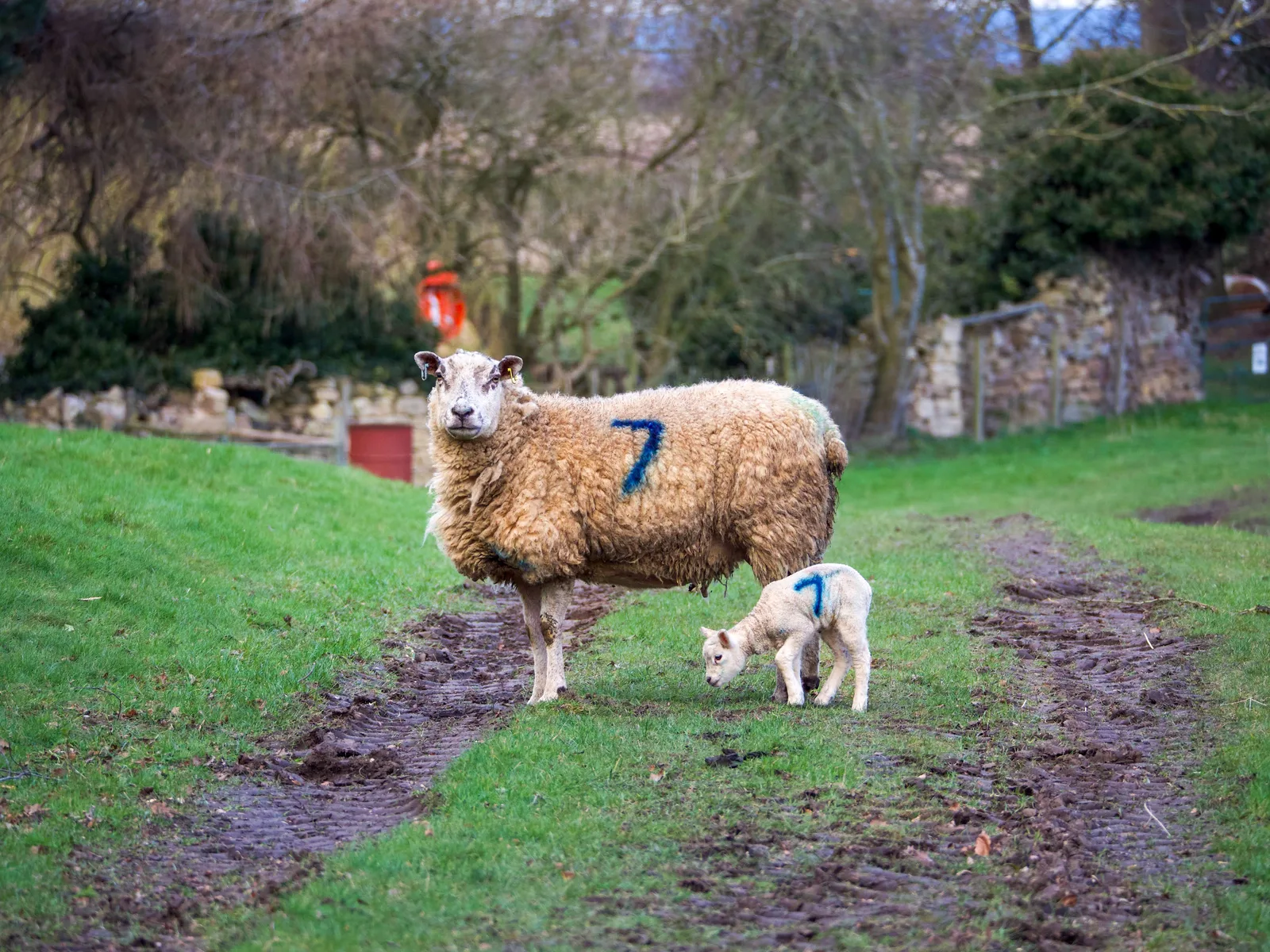
The short version: if you are going to keep cattle, sheep, goats, pigs or poultry anywhere in England, the land or building where they will live needs a county parish holding (CPH) number. It makes no difference whether they are a business, a hobby or pets. The application opens 6 weeks before the animals arrive, and no earlier. Since 22 July 2026 it is one online application to the Rural Payments Agency (RPA), which then shares your details with the Animal and Plant Health Agency (APHA) for your flock or herd number, and with the British Cattle Movement Service (BCMS) if you keep cattle. Keepers of fewer than 50 poultry, or of other captive birds, go a different way, which we come to below.
The CPH number is how the government knows where livestock are kept and can trace them, to help prevent and control disease. It is tied to the land and buildings, and you will be asked for it when you order ear tags and when you report animals moving on or off.
Which animals need one?
GOV.UK lists:
- cattle, sheep, goats and pigs;
- poultry (fewer than 50 poultry go through APHA instead, see below);
- deer, which GOV.UK marks “voluntary unless moving livestock”;
- camelids, such as alpacas and llamas, which are voluntary.
Horses are not on the list. The CPH page mentions them only for export: before exporting or moving horses and other equines, including donkeys and mules, from Great Britain to the EU or Northern Ireland, you need a CPH number from APHA.
When to apply
You can apply at most 6 weeks before the livestock arrive, and GOV.UK asks you to apply as early as you can within that window to reduce the risk of delay. Its own example: cattle arriving on 1 June 2026 means applying on or after 20 April 2026.
If you already have a CPH number for other livestock, you do not start again. You amend your CPH details instead, which is also how you add or remove land, update the livestock you keep, or ask for another CPH number.
One application instead of three
GOV.UK's page for existing keepers lists three registrations made when they started keeping livestock: the RPA for the CPH number, APHA for a flock or herd mark, and BCMS for cattle. On 22 July 2026 GOV.UK changed the process, in the words of the CPH page's change note: you only need to register with the RPA, unless you are keeping fewer than 50 poultry or any number of captive birds.
After you apply, the RPA shares what you registered with APHA, to get your flock or herd number, and with BCMS, to put any cattle you keep on the Cattle Tracing System (CTS). You should then get:
- an email from the RPA with a validation link, your single business identifier (SBI) and your customer reference number (CRN). The link has to be clicked within 12 hours; after that you ask the RPA for another one. The CRN is what you quote when you contact the RPA, and the CPH amendment service asks for both;
- an email from APHA with your flock or herd number;
- an email from BCMS with your CTS details and other information, if you keep cattle.
One thing that could confuse you: some older GOV.UK pages still describe the separate steps. Register livestock to get a flock or herd mark (last updated June 2023) tells you to register with APHA yourself, and says the mark must be in place before you move livestock onto the land. Register as a cattle keeper with BCMS (published 23 July 2026) has its own form, and says cattle, bison and buffalo should not be moved onto the holding until you are registered with BCMS, which usually takes 10 working days. The CPH page, the one GOV.UK changed on 22 July, is the one that says the RPA passes your details on. If the APHA or BCMS email does not come, their contact details are at the end of this article.
What the form asks
You can apply online if you are over 18 and either not yet registered with the Rural Payments service, or registered but without a CPH number. If you are registered and already have one, you use the CPH amendment form or apply by phone. GOV.UK's examples of what the form asks for:
- your name and contact details: correspondence address, phone number and an email address;
- the business you are part of, if there is one;
- where the livestock will be, as an easting and northing;
- whether you own or rent the land or buildings;
- answers to security questions, to keep your account secure.
If you rent the land, the CPH number still comes from the RPA.
If you will keep cattle, bison or buffalo, you must also confirm the name and address of your veterinary practice, for bovine TB testing. If cattle are already on the land, you give each animal's ear tag number and the date it moved on. You can type those into the form, but with 20 or more animals the RPA recommends its bulk spreadsheet: tag numbers in column A, one per row, and the date each animal moved onto the holding in column B.
Poultry and other birds go a different way
- Fewer than 50 poultry, or any number of other captive birds (canaries, finches and pigeons are GOV.UK's examples): you register with APHA instead of applying to the RPA, and the CPH number comes from APHA. You must register within one month of keeping the birds, and that includes birds kept as pets. Without a CPH number the online registration takes about 10 minutes. After that you confirm your details to APHA every 12 months. Parrots and perching birds (budgies, cockatiels, canaries, finches) do not need registering if they are fully housed in your home or another indoor structure with no access to the open air; take them outdoors at any time and they do.
- 50 or more poultry: poultry are on the RPA's list, so the CPH number comes through the RPA application. The birds themselves are then registered with APHA within one month of keeping them, on the form for 50 or more birds (updated 30 September 2026), which asks for your CPH number.
Grazing someone else's land for a while
If you will keep animals on someone else's land or in their buildings temporarily, you need a temporary land association (TLA) or a temporary CPH (tCPH) number from APHA, on top of your own CPH number for land in England. Which one depends on where the land is:
- A TLA is for land or buildings within 10 miles of the main place you keep livestock, which you do not own, in England or Wales, and in the same bovine TB risk area as your CPH number. It is treated as part of your own CPH number, so moves between the two are not recorded or reported, and the standstill rule does not apply to them.
- A tCPH number is for land more than 10 miles away. You can also use one closer than that, if the land is in a different TB risk area or you want to run it as a separate holding. It is kept separate from your CPH number: its own holding register, moves between the two recorded and reported, and the standstill rule applies to them.
Either way you must be the only person keeping livestock there. You cannot get one if your animals will mix with someone else's, or for common land. Both last up to a year and can be renewed. You apply on APHA's form, by email to temporaryland@apha.gov.uk or by post.
Once the animals are on the holding
Ear tags for cattle, sheep and goats come from GOV.UK's approved suppliers, who ask for your CPH number and your flock or herd mark. Moves onto the holding are reported:
- Sheep and goats: you report the move on within 3 days of the animals arriving, online or by posting the movement document to the Livestock Information Service. The keeper who sent them cannot report it for you. The move also goes in your holding register within 36 hours.
- Cattle: moves on and off are reported to BCMS within 3 days, and recorded in your holding register and in each animal's passport within 36 hours.
- Pigs: pig moves go through eAML2. The sending keeper sets the move up before the pigs travel, the pigs travel with movement documents, and as the receiving keeper you confirm that they arrived.
If something changes later
A new address or phone number, a change of business name, land taken on or given up, a different species: the RPA and APHA need to know as soon as possible and within 30 days, and so does BCMS if you keep cattle (GOV.UK). For the CPH details there is an online amendment service, or you can call the RPA. The online service asks for your SBI, CRN and CPH number, and for a date the change takes effect, which has to be within 6 weeks of the day you apply.
Shows and markets: what changed on 9 November
The latest change to the CPH page is about animal gatherings: markets, shows and collection centres. For events from 7 February 2027 (90 days or more after 9 November 2026), you apply to APHA for an animal gatherings licence at least 90 days before the event. Once the licence is approved, APHA asks the RPA to allocate the CPH number, and you do not apply to the RPA separately. For events before 7 February 2027, you still use the CPH form and apply for the licence separately.
Wales, Scotland and Northern Ireland
All of this is England's process. In Wales the CPH number comes from Rural Payments Wales. In Scotland you contact your local area office, listed on Rural Payments and Services. In Northern Ireland, DAERA sets different rules. If your land crosses a border, call the RPA.
Who to call
- RPA (CPH numbers): 03000 200 301, Monday to Friday, 8:30am to 5pm.
- APHA: 03000 200 301, Monday to Friday, 8:30am to 5pm. By email, customer.registration@apha.gov.uk for flock and herd marks and poultry registration, temporaryland@apha.gov.uk for a TLA or tCPH.
- BCMS (cattle): 0345 050 1234, Monday to Friday, 8:30am to 5pm, or bcmsenquiries@rpa.gov.uk.
If you are still working out how many animals your land carries, our livestock unit calculator turns a headcount into livestock units per hectare and per acre, using DEFRA's conversion table.
Sources
- GOV.UK — Apply for a county parish holding (CPH) number (updated 9 November 2026)
- GOV.UK — Amend your county parish holding (CPH) details (5 May 2026)
- GOV.UK — Register livestock to get a flock or herd mark (June 2023)
- GOV.UK — Register as a cattle keeper with the British Cattle Movement Service (23 July 2026)
- GOV.UK — Register as a keeper of less than 50 poultry or other captive birds (30 September 2026)
- GOV.UK — Register as a keeper of 50 or more poultry or other captive birds (30 September 2026)
- GOV.UK — Get a temporary land association (TLA) or temporary CPH (tCPH) number (October 2024)
- GOV.UK — Report sheep and goat movements, Record and report cattle movements, Pig keepers: report and record movements
- GOV.UK — Livestock keepers: update your details (30 September 2026)
- GOV.UK — Animal gatherings: licences (9 November 2026)
This is a summary of GOV.UK guidance, not advice. The GOV.UK pages and the agencies that hold your registration decide what applies to you.