The short version: on 5 November the government formally adopted the bovine TB control strategy published in June, which aims to make England officially TB-free by 2038, and most of it is not a new rule on your farm yet. Four things are already moving: wider government-funded gamma blood testing, a pilot of privately paid blood tests, the cattle vaccine with its DIVA test, and badger vaccination plus a survey of found-dead badgers starting this month. Everything else (published herd risk scores, tighter rules for inconclusive reactors, stricter movement tests out of the High Risk Area, testing intervals set by herd risk, and how compensation works) waits for a first delivery plan due in late spring 2027. That is what the government response says, read alongside the strategy itself.
Where TB stands today
- 3.4% of herds in England were under TB restriction at the end of June 2026, against 4.2% a year earlier.
- 20,244 cattle were slaughtered for TB control in the 12 months to June 2026, 4% fewer than the 21,126 a year before, and well below the peak of 34,518 in the 12 months to April 2018.
- New herd breakdowns were down by a fifth on the previous 12 months.
- 2026 is the first year in more than a decade with no badger culling: every licence expired or was revoked by Natural England.
The figures are from the GOV.UK announcement of 5 November; the full series is in Defra's bovine TB statistics.
Already moving
- Gamma blood testing. The government is expanding government-funded, mandatory interferon-gamma testing alongside the skin test. Its economic analysis says wider use in breakdown herds could find infected cattle sooner and shorten breakdowns, with most of the modelled benefit going to farmers, although extra testing brings up-front costs for both farms and government.
- Privately paid blood tests. APHA is running a pilot of privately funded ancillary TB blood testing. In the strategy's design, when such a test is used in an officially TB-free herd, only the animals that come back non-negative are restricted, and the herd keeps its status unless a statutory test or a slaughterhouse finding takes it away. The testing would run only under a private vet-led plan with set timescales and biocontainment, with APHA told beforehand and given the results.
- The cattle vaccine. The on-farm part of the third and final phase of the field trials has finished. An application to license CattleBCG is with the Veterinary Medicines Directorate, Thermo Fisher has the contract to make the reagent for the DIVA skin test (which tells infected from vaccinated animals), and the DIVA application to the VMD is planned for 2028. The ambition is to deploy vaccination by 2030, first in selected high-risk areas, then more widely, on a voluntary basis, as soon as practicable.
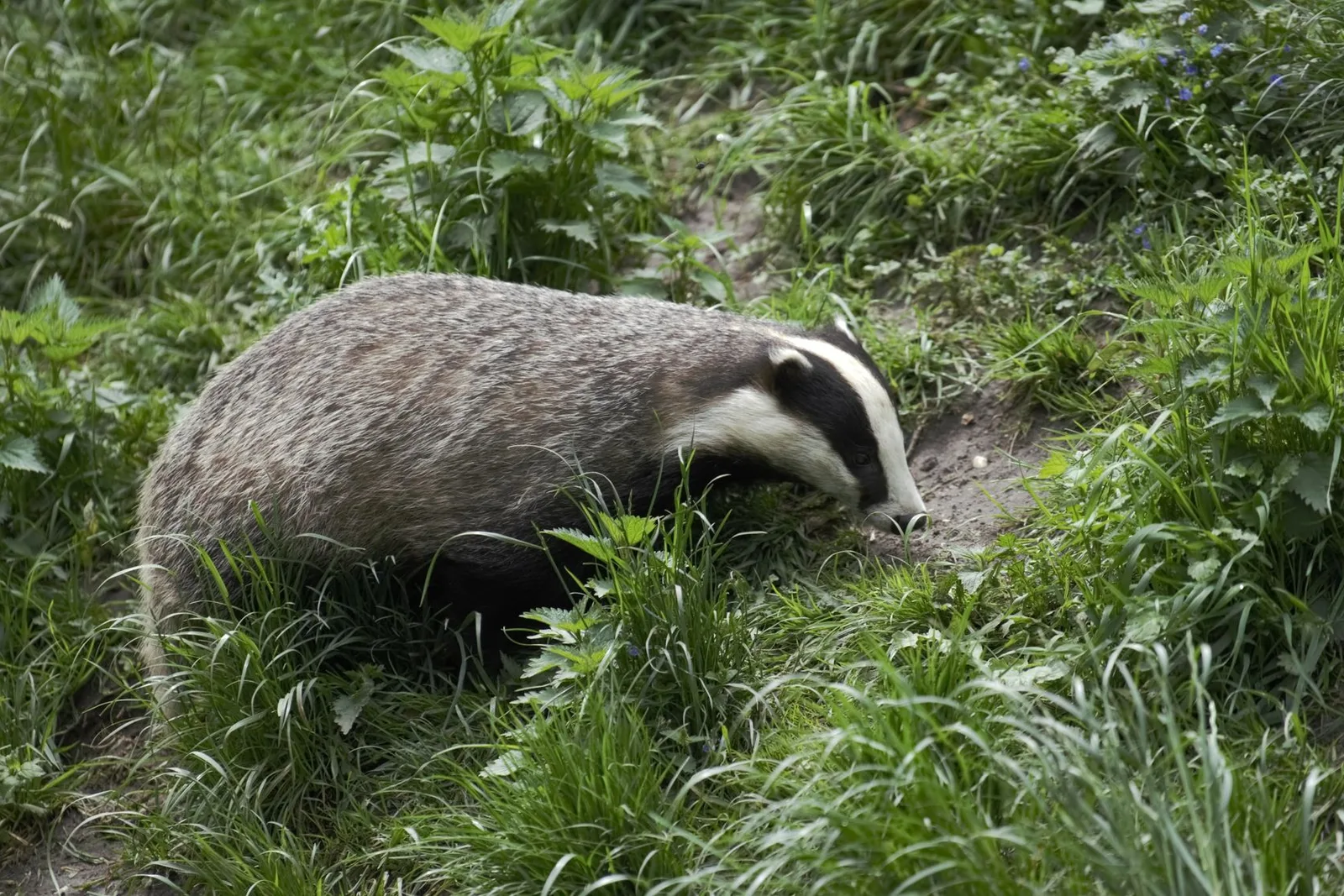
- Badger vaccination. A new Badger Vaccination Field Force has started this year in North Shropshire, North Worcestershire and South-East Oxfordshire, with more areas planned for 2027 and 2028.
- Found-dead badgers. Later this November a government scheme starts collecting badgers found dead for TB testing, at first in five counties of the High Risk Area. Separate projects are testing wild deer in Exmoor, Cornwall and Oxfordshire.
What the strategy would change on your farm, recommendation by recommendation
None of these has a date yet. The response says the first delivery plan will set which actions come first and how they are put in place, and that pace and sequencing depend on future funding decisions.
| Recommendation | What it would mean |
|---|---|
| Herd TB risk scores | APHA already works out a monthly TB risk score for every herd but does not publish it. First every farmer would be told their own score and how it is worked out; later all scores would be published, and shown at the point of sale for every farm an animal has been through. |
| Inconclusive reactors | A resolved inconclusive reactor would stay restricted to the holding for life, and a gamma test could no longer lift that restriction. It would leave the herd only direct to slaughter, within a set time (the strategy gives 12 months as an example). The same would apply to animals that are non-negative on validated private tests. |
| Movement testing | A more sensitive reading of the skin test, the export interpretation for example, for cattle moving out of a herd in the 12 months after its restrictions lift, where APHA judges that herd at higher risk of breaking down again. Then for every move from the High Risk Area to the Edge or Low Risk Area, and from the Edge to the Low Risk Area. |
| Testing intervals | More frequent testing for high-risk herds in the Edge and Low Risk Areas that are not already on annual or six-monthly tests. Low-risk herds in the High Risk Area reviewed for a move from six-monthly to annual testing. |
| Persistent and recurrent herds | Stricter statutory testing before such a herd regains its TB-free status, likely including more gamma testing and longer gaps between skin tests. |
| More test choice | Skin tests outside the routine testing window, where APHA agrees. |
| Approved Finishing Units | A review of whether AFU rules are proportionate to the risk, and more capacity in AFUs and other biosecure routes to slaughter for herds under restriction. |
| Risk-based trading | An assessment of ways to encourage buying on TB risk, including market-led incentives, once reliable herd and animal risk information exists. |
| Local targets | TB targets for smaller local areas, alongside the national High Risk, Edge and Low Risk Areas, not instead of them. |
The response adds one more thing that could shape all of this: possible alignment with EU sanitary and phytosanitary rules, where England's TB controls and the EU's differ in places.
Compensation: the open question
Compensation for compulsory slaughter costs taxpayers between £25 million and £30 million net a year, the response says, and the government wants it looked at now. Defra-commissioned research, due out shortly, found that simply cutting compensation rates is unlikely to change how farms manage disease risk; it points instead to linking compensation more clearly to proportionate expectations on biosecurity, safer herd management and risk-based trading. The government has asked the Steering Group to set out in the first delivery plan how that work goes forward, and says any change would have to be fair, practical and recognise that farms face different circumstances and risks. The strategy itself suggests modelling co-investment options such as cost recovery, herd risk insurance and sector levies, and ways of using compensation to encourage cattle vaccination. Nothing has been decided.
Badger culling
The government says it has met its manifesto commitment to end the badger cull, and the minister promised the strategy will ensure the end of culling continues. The strategy also recommends a framework to guide any future decisions on lethal badger control, based on international principles for ethical wildlife control.
Who runs it from here
A new industry-government Strategy Board replaces the Bovine TB Partnership for England. Public appointments open later this year and the board is set up in 2027. It publishes rolling three-to-five-year delivery plans and progress reports, while ministers keep the statutory decisions, the budget and legislation. Anyone interested in serving can register at btbengage@defra.gov.uk. The government also wants local farmer and vet groups to take on voluntary TB action, with the TB Hub as the place that connects them.
What the NFU said
NFU deputy president Paul Tompkins welcomed parts of the strategy and called for "serious movement" on cattle and badger vaccination and on data sharing. On blood testing, he said farmers should have access to more tests, including gamma, but that "these should not be mandatory": the right test should be decided by farmers and their vets.
Dates for the calendar
- November 2026: found-dead badger collection starts in five High Risk Area counties.
- Later in 2026: public appointments open for the Strategy Board.
- Late spring 2027: the first delivery plan, with the priority actions and the next steps on compensation.
- 2027: the Strategy Board is set up; more badger vaccination areas in 2027 and 2028.
- 2028: the DIVA skin test reagent goes to the VMD for approval.
- 2030: the ambition for cattle vaccination with a DIVA test.
- 2038: the target for Officially Bovine TB-Free status in England.
Sources
- GOV.UK — Government response to the recommended bovine TB control strategy for England (5 November 2026)
- Bovine TB control strategy for England, as recommended by the Steering Group of the Bovine TB Partnership (PDF)
- GOV.UK — Government bid to make England TB-free by 2038, with vaccines for cattle and badgers (5 November 2026)
- GOV.UK — Bovine TB statistics
- NFU — NFU urges Defra to maintain crucial momentum on bTB (5 November 2026)
This is a summary of the strategy and the government response, not advice. Until the delivery plan changes a rule, your herd's testing follows APHA's current requirements.